 thesunyttcbali
 Table of Contents
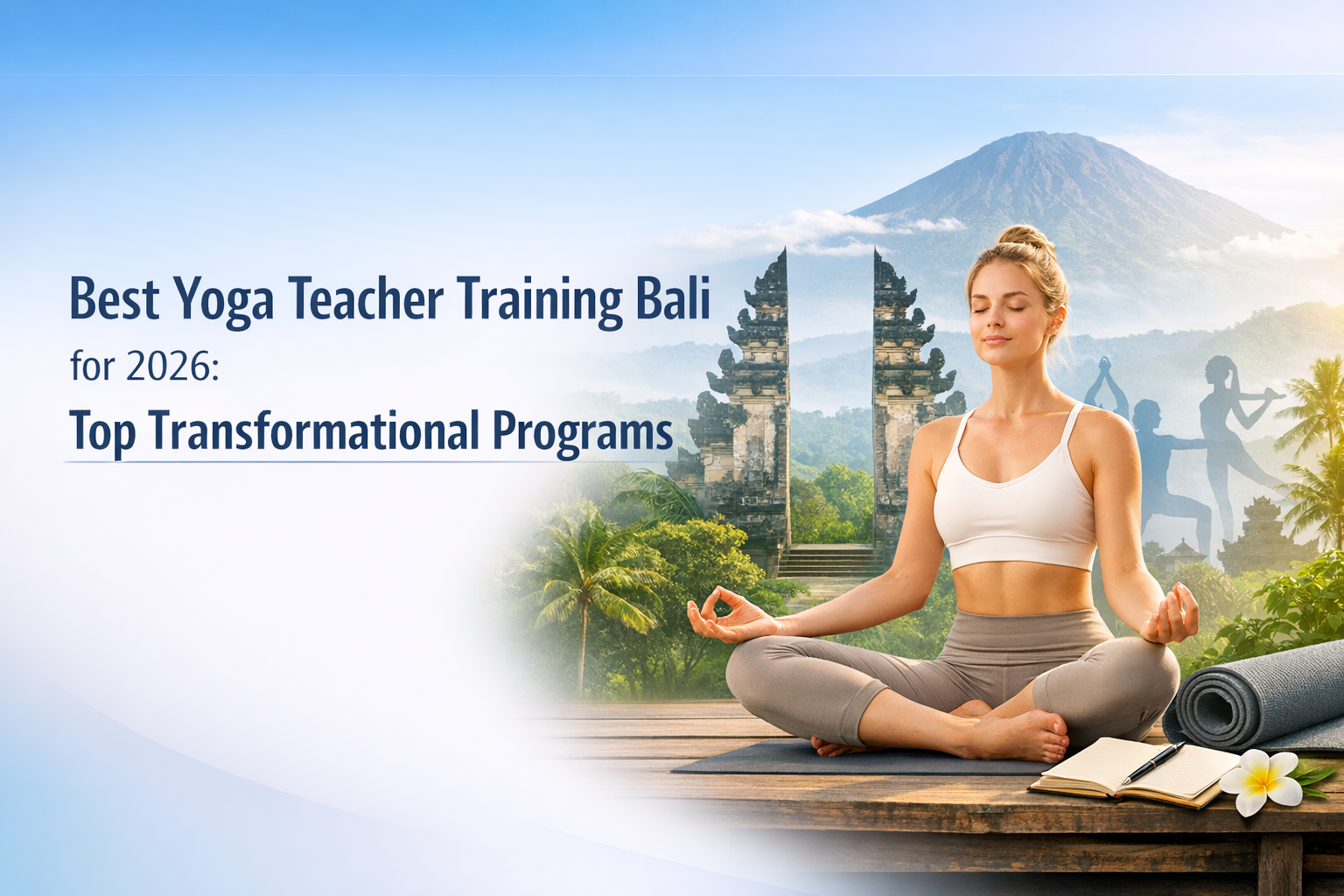
Bali is a yoga paradise of the world, with fertile rice fields, rolling waves of the sea, and primeval spirit, which makes the teacher training experience a dream. Trainees at the base of becoming yogis come here all over the world, with programmes that are made up of hard Ashtanga, Vinyasa and Hatha training combined with Balinese curing customs. However, when it comes to dozens of schools competing to attract attention, it becomes difficult to determine what the best yoga training Bali has to offer is.
This guide cuts through the noise, spotlighting standout 200-hour Yoga Alliance-certified options based on alumni feedback, location perks, instructor credentials, and value. Whether seekers chase beachside bliss in Canggu or jungle serenity in Ubud, these picks deliver life-changing depth.
Why do Yoga Teacher Training in Bali?
Imagine this: it is dawn and the volcanoes are mist-covered, and a lot of yogis are moving through the sun salutations and monkeys are talking in the tree tops. That’s the magic of Bali. The Island of the Gods is not a nickname of the island, as the place is constituted with temples, which provide reminders of the origins of yoga in philosophy and are present daily.
Key reasons Bali tops the list for teacher trainings:
- Spiritual Depth: Programs weave in Balinese rituals like water blessings and offerings, grounding poses in cultural wisdom.
- Global Credibility: Most reputable training centre, like The Sun YTTC Bali, are registered with Yoga Alliance.
- Affordable Luxury: Expect all-inclusive stays (meals, excursions) from $2,500–$4,500 USD for 200 hours, cheaper than India or Costa Rica equivalents.
- Yoga Alliance Certification: Most reputable schools register with YA, ensuring global teaching cred.
- Community Vibe: Post-training networks link grads to retreats worldwide.
What Makes a Yoga Teacher Training the “Best” in Bali?
Not all programs shine equally. Top-tier ones balance anatomy, sequencing, philosophy, and practicum teaching with supportive environments. Look for:
- Experienced Leads: Instructors with 500+ teaching hours and lineages from Iyengar or Bihar schools.
- Holistic Curriculum: 100 hours of practice, 50 philosophy, 30 anatomy, 20 teaching methodology.
- Small Groups: 10–20 students max for personalized feedback.
- Extras: Ayurveda workshops, excursions to temples like Tirta Empul.
- Post-Training Support: Lifetime access to manuals and advanced modules.
Avoid cookie-cutter resorts churning out certificates. Real growth happens in immersive settings where challenges build resilience—like holding Warrior II as rain pelts the shala.
Top 5 Best Yoga Teacher Training in Bali
1. The Sun YTTC Bali – Radiant Transformation in Ubud’s Heart
Nestled in Ubud’s emerald embrace, this boutique school is a frontrunner for those seeking the best yoga teacher training Bali has to offer. Their flagship 200 hour yoga teacher training in Bali feels more like a personal odyssey than a course. Lead instructors blend dynamic Vinyasa with restorative Yin, starting daily at 6 AM with pranayama.
What sets The Sun YTTC Bali apart? Lead instructors hail from global lineages, blending dynamic Vinyasa with restorative Yin and Balinese Tantra. Daily schedule kicks off at 6 AM with pranayama and meditation, flowing into six hours of asana practice. Afternoons tackle anatomy (dissection-level detail on meridians) and The Yoga Sutras, decoded via storytelling sessions under banyan trees.
2. Radiantly Alive Yoga in Ubud – Multi-Style Mastery
Ubud’s Radiantly Alive buzzes with eclectic energy. Their 200-hour immersion fuses Hatha, Aerial, and AcroYoga, ideal for versatile teachers. Shalas overlook monkey forests; expect wild encounters mid-Savasana.
Strengths include guest masters from India, and philosophy dives into the Bhagavad Gita. Groups of 15 keep it personal.
3. Samadi Bali – Wellness Oasis in Canggu
The salty surf air and boho cafes of Canggu prepare the scene of Samadi Bali, where wellness luxury is crashing like a perfect wave. The 200-hour training program at this location is more of a fluid Vinyasa with optional surf sessions to align breath and ocean rhythm. Ocean front shalas would be to practise with the sound of breakers, your Ujjayi metronome.
Teachers are experts in therapeutics – envision narrow calf skins over irritable knees or IT bands, based on decades of curing professional athletes. The teach-out-of-the-scars is the ideal career change; a former corporate expatriate gushed, Fixed my back and started my studio. The bliss is added by daily herbal tonics and cacao ceremonies.
4. Bloom Yoga in Nusa Lembongan – Island Escape Intensity
Nusa Lembongan’s rugged cliffs and turquoise swells cradle Bloom Yoga’s off-grid haven, stripping away distractions for pure Ashtanga fire. This 200-hour intensive digs into Primary Series with relentless precision—counted breaths, floating jumps, the works—while daily beach cleans weave in karma yoga, leaving you grounded and giving back.
5. The Practice Shack in Seminyak – Urban Flow Hub
The Practice Shack is powered by Seminyak electric buzz, scooter buzz, beach club buzz, and designer stall buzz. The shala has a roof, and a stylish villa is depicted as the frames with endless ocean views and swaying palm trees in contrast to the bustling city.
This 200-hour jewel is a mix of hard holds with light sequences, as well as hip-opening workshops that help to defrost travel rigidity.
Deep Dive: Anatomy of an Elite 200-Hour YTTC Curriculum
Elite programs follow Yoga Alliance standards but elevate with Bali flair. A typical 25–30 day flow:
- Week 1: Foundations – Asana breakdowns, pranayama (Ujjayi, Nadi Shodhana), subtle body intro.
- Week 2: Alignment & Anatomy – Myofascial release, joint mechanics via partner work.
- Week 3: Philosophy & Teaching – Sutras, sequencing 60-min classes, practicum with peers.
- Week 4: Integration – Karma yoga (temple service), mantra chanting, assessment.
The Sun YTTC Bali exemplifies this, layering Balinese Agni Hotra fire rituals for energetic cleansing. Expect 400+ practice hours total—enough to refine handstands and backbends safely.
Bali Locations Compared: Ubud vs. Canggu vs. the Islands
- Ubud: Soulful, green, philosophical. Best for introverts (The Sun YTTC Bali thrives here).
- Canggu: Social, beachy, modern. Suits extroverts craving cafes post-practice.
- Islands (Penida/Lembongan): Remote, raw power. Ideal for unplugging.
Pro tip: Dry season (May–Sept) means prime weather; avoid rainy November–March.
Conclusion
Bali’s yoga teacher trainings transcend certification—they spark profound shifts, arming participants with skills to guide others toward balance. Among the elite, The Sun YTTC Bali stands tall for its heartfelt curation, stunning Ubud locale, and ripple-effect results. Whether chasing the best yoga teacher training Bali has to offer or a personal breakthrough, these programs invite deeper living. Ready to step onto the mat? The island’s ancient wisdom calls—answer it in 2026.
Frequently Asked Questions
What yoga styles shine in top programs?
It is not only about simplicity but also accessibility. An excellent beginner posture is one that is stable and does not demand a high level of flexibility to attain high rewards. Imagine that you are concentrating on what the stretch is like in your muscles and not on what it is like in a mirror.
How do programs teach pranayama effectively?
Don’t look at a clock, look at your breath. 5 to 10 slow, deep breathing is the most pleasant. You will be used to longer when you get stronger and more focused and you will not notice that you are waiting to get through.
What's the focus on yoga philosophy?
Not at all. When on a carpet, you have already gone halfway. Even a thick towel will suffice, but it will slide. In case you are afraid of slipping, then use grip socks or simply wear nothing and walk on a stable surface. The yoga occurs within your body and not on the soles of your feet.
How do programs refine asana alignment?
Absolutely, and many find it helps with cramps. The key is to listen to your energy levels. You might want to skip intense abdominal work or deep twists and instead lean into restorative shapes like Child’s Pose or Reclined Bound Angle.
Do programs cover anatomy for yoga teaching?
Usually, yes! Gentle movements like Cat-Cow (to wake up the spine) and Bridge Pose (to strengthen the glutes and support the lower back) are lifesavers. Just avoid deep backbends or aggressive forward folds until your spine feels more mobile.
What's the teaching practicum like?
Child’s Pose and Savasana (lying flat on your back) both help you to achieve a parasympathetic rest and digest mode through your nervous system which is the perfect place to do a quick 2-minute reset following any long, hard day of meetings or running errands.
How do programs incorporate meditation?
Building stability takes time, so don’t be embarrassed to use your toes as a “kickstand” by keeping them on the ground (and using a wall for support). It is far better to have a stable and supported Tree Pose than to be flopping about in the middle of a room.
Do programs teach yoga for different bodies?
The order of the yoga poses is important. Think of doing yoga poses like you are doing a workout. You want to get your body ready before you do the stuff. You should always start with yoga poses that’re easy on your spine, like the Cat-Cow pose to get your blood flowing.
What's the role of mantra in programs?
They aren’t “essential,” but they are incredibly helpful tools—not “cheating.” If you can’t reach the floor, bring the floor to you with a stack of books or a sturdy pillow. Using a prop often allows you to get a better stretch because your body isn’t straining to stay upright.
How do programs balance karma yoga?
Consistency beats intensity every time. Aiming for 3 to 5 days a week is plenty to see real progress in your flexibility and stress levels. Giving your body a day or two to rest actually helps your muscles recover and prevents “yoga burnout.”